
- >> Human and Bio Information Systems Division
-
Brainmorphic Computing Systems
Researcher
[ Professor ]
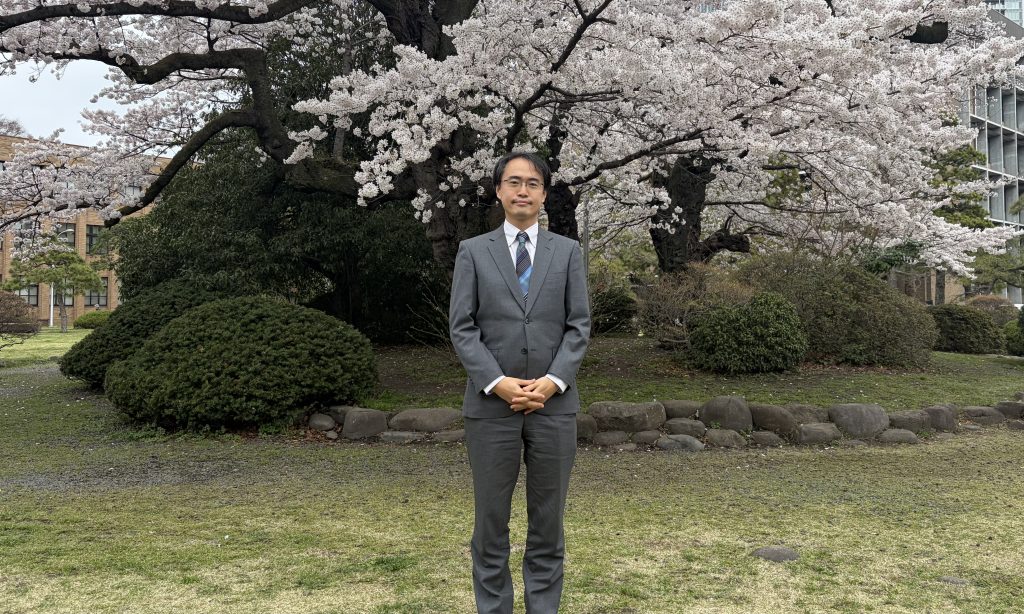
Hideaki Yamamoto
Group Web Site
https://www.yamamoto.riec.tohoku.ac.jp/en
Research Activities
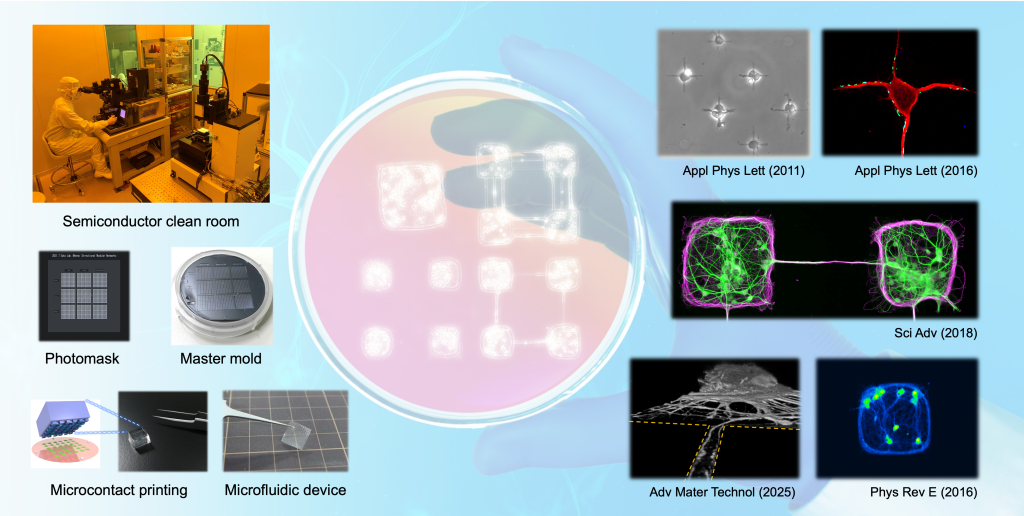
The information-processing mechanisms of living systems, including humans, are expected to drive new breakthroughs in information and communication technologies. Realizing this potential requires uncovering the computational principles of biological neural networks and translating them into engineered systems. As current AI approaches maturity, developing new forms of brain-inspired computing systems has become an urgent need. Our laboratory investigates the computing principles in biological neural networks through experimental neuroscience and computational modeling, while developing novel brainmorphic computing systems through microelectronics and bioengineering.
Brainmorphic Computing Systems (Prof. Yamamoto)
Research topics
- Constructive study on brain information processing
- In vitro modeling of brain functions using cultured neuronal networks
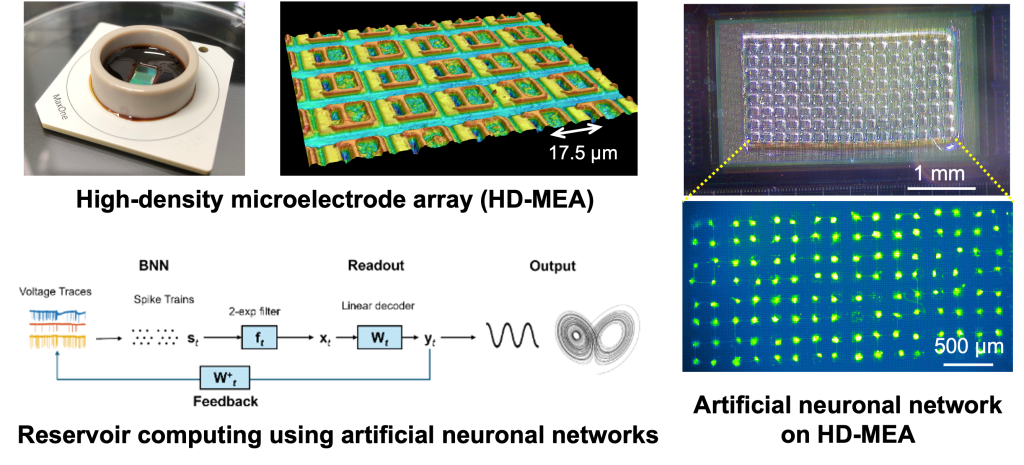
- Biologically inspired machine learning and its system implementation
- Microphysiological systems for neuroscience applications
We study the neural basis of information processing in the brain from an engineering perspective and translate that understanding into brain-inspired computing systems and biomedical technologies that support our future super-smart and super-aging societies. Using artificial neuronal networks developed in our lab as in-vitro models for brain networks, we investigate key features of the biological computing that are not yet captured by current artificial neural networks and other AI systems. We then implement these principles in software-based biologically plausible models, ultra-low-power neuromorphic hardware, and “wetware” based on cultured cells. Additionally, by utilizing cultured human neurons, we aim to elucidate the mechanisms of neurological disorders and to establish new in vitro disease models.